

Customer feedback is valuable to marketers. Raw, unvarnished insights can revolutionize every facet of content strategy. By tapping into the voice of the customer, a brand can develop content that satisfies the audience’s needs, pain points, and wishes. This produces relevant and compelling marketing content but also establishes trust and credibility by demonstrating the company listens and acts on its customers.
From glowing testimonials and reviews to building case studies that prove real-world outcomes, translating customer feedback into content is a great way to drive long-term business growth and build a loyal group of brand advocates.
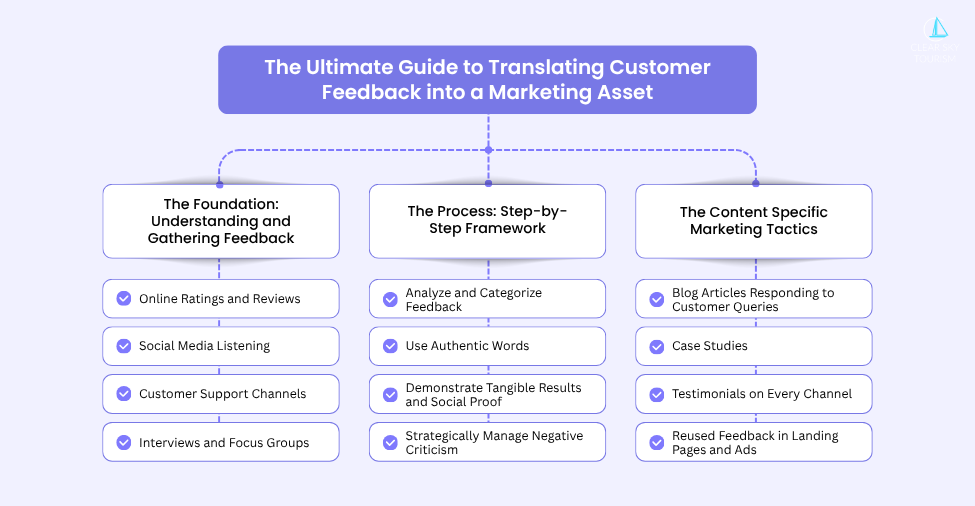
The Ultimate Guide to Translating Customer Feedback into a Marketing Asset
The Foundation: Understanding and Gathering Feedback
- Online Ratings and Reviews: On some sites and public forums, customers publicly share their opinions. These reviews provide raw insights into customer satisfaction, pain points, and preferences. Consumers value user reviews as highly as word of mouth, and this is a potent source of social proof.
- Social Media Listening: Track mentions, comments, and direct messages on social media platforms such as Facebook, X, and Instagram. Social listening tools can be used to monitor conversations about your brand and determine popular questions or sentiment.
- Customer Support Channels: Your support tickets, live chats, and phone calls are an open window into your customers’ greatest struggles. Review these interactions to identify recurring issues, feature requests, or areas of confusion.
- Customer Surveys: Utilize survey tools to send targeted surveys following a purchase, facilitate interaction or a specific milestone. Such survey scores can yield rich quantitative and qualitative information.
- Interviews and Focus Groups: To gain deeper and qualitative information, conduct one-on-one interviews or conduct small focus groups with essential customers. Such direct contact can uncover emotional decision drivers often lost in surveys.
The Process: Step-by-Step Framework
- Analyze and Categorize Feedback: Sort through the unpolished data to identify key themes and categorize them accordingly. Create categories such as common pain points, customer objections, and compliments for specific features. Employ AI-enabled sentiment analysis tools to quickly recognize emotional trends from large sets of data.
- Use Authentic Words: The customer’s own voice is the most compelling marketing asset. Pay attention to the very words and phrases customers use to articulate their challenges and share their triumphs. Incorporate this authentic language into your site content, ad copy, and product descriptions to make your message relatable and credible.
- Demonstrate Tangible Results and Social Proof: Leverage feedback to show tangible results and instill confidence. When customers observe how your product resolves a genuine issue for someone similar to them, their skepticism gives way to confidence.
- Strategically Manage Negative Criticism: By reacting publicly and openly to negative criticism, you demonstrate that you care about listening and making things right. A prompt, respectful, and composed public reaction, followed by taking the in-depth discussion to a private forum, can reinforce the brand image. Subsequently, develop a content piece detailing how you handled the issue and how your product benefited from it as a result.
The Content Specific Marketing Tactics
- Blog Articles Responding to Customer Queries: Customer support tickets and surveys are gold for blog topics. Convert the FAQs into comprehensive blog articles that serve as learning materials and reflect expertise.
- Case Studies: Case studies are detailed success stories that conform to a predictable pattern of challenge and solution results. Interview satisfied customers to write down their story, highlighting their original issues, how they utilized their product, and the quantifiable outcomes that they experienced. They are extremely powerful for B2B marketers who must prove proven ROI.
- Testimonials on Every Channel: Avoiding limiting testimonials to one page on the site. Including strong quotes on the site’s homepage, around calls to action, and utilizing email marketing, as well as video testimonials for additional visual emphasis.
- Reused Feedback in Landing Pages and Ads: Apply real customer wording to your ad copy in order to achieve shared goals. By placing reviews directly on your social media ads, you can boost trust and click-through rates as well.
Customer Stories to Market Success
Placing customer feedback at the heart of your marketing efforts is all about developing a strong and honest narrative that markets itself. By actively listening across social media, reviews, and support channels, and then strategically converting that insight into actionable content, the brand builds a strong, self-sustaining cycle of trust and growth. By doing this, you’re pushed beyond mere product advertising and into the business of demonstrating proven value, credibility, and genuine care for your customers. For an online travel company like Clear Sky Tourism, this entails taking a traveler’s rave review of a smooth booking process and turning it into a compelling advertisement, or taking a question from an issue ticket and crafting it into an informative blog entry that addresses future travelers’ concerns. The outcome is a stronger, customer-centered brand that not only meets but surpasses expectations, inspiring a loyal tribe of travelers to share their own tales and driving your future achievement.