
As travelers increasingly research and book online, standing out in the increasingly competitive tourism market is now more than just an outstanding website and an effective on-page SEO strategy. In 2025, the search engine optimization game has changed dramatically with AI-powered search, user-focused signals, and mobile-first experiences at the center.
Having a solid on-page SEO strategy can no longer be just about keywords and meta tags. It’s about creating real value, establishing topical authority, and optimizing all on-page factors to meet user demands and the higher expectations of search algorithms. This checklist will serve as a definitive guide for tourism websites to adopt the shift to AI-centric organic traffic development, ultimately leading to more bookings in an increasingly AI-dominated search world.
Learning On-Page SEO: A 2025 Manual for Tourism-focused Websites that Convert
Keyword Exploration
- Utilize naturally conversational long tail keywords – Spot terms which sound like a person’s natural speech, like “best family holidays in Rome” or “cheap honeymoon places in Bali” to attract voice search traffic as well as high intent traffic.
- Understand search intent – Get to know the “why” of the search. Where the user, in their discovery or booking process, creates content speaking to each step of the traveler’s journey.
- Include seasonable terms and terms related to emerging trends – Look for language that may be associated with a certain happening or emerging trend in tourism. As an example, “luxury eco-lodges 2025” or “regenerative travel packages.”
- Use today’s tools- Use a combination of classic and AI powered tools to get deeper insights.
Content Optimization
- Align content with search intent- Each page should have a definitive purpose, like a destination page should encourage, while a booking page should simply flow.
- Craft interactive destination guides- Create comprehensive, interactive guides for each destination that have visual appeal. Pages celebrating local interest sites, restaurants, culture, lodgings, and seasonal activities.
- Showcase user-generated content- Showcase real travel photos, reviews, and experiences by real travelers, which will assist in showcasing social proof and build trust.
- Include multimedia and visual storytelling- Use high definition images, video clips, and virtual tours to enhance the engagement and the experience for users. Use good file naming and alt text to tag those images.
- Design for scannability- Use clear, concise headings (H1, H2, H3,) bullet points, and short paragraphs to aid in the scannability of content for both users and search engines.
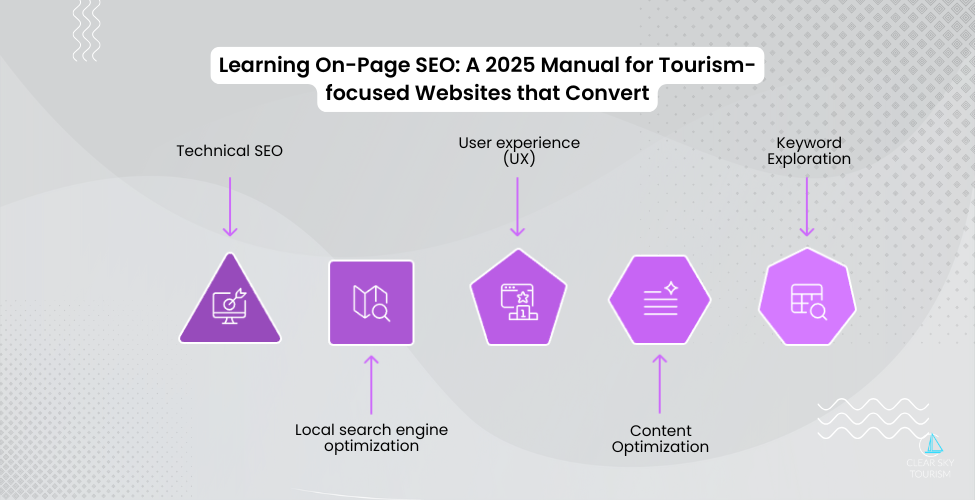
User experience (UX)
- Make sure mobile first – Most travel bookings are conducted via mobile. Your website should be completely responsive to provide a clean experience for smartphone users.
- Optimize for Core Web Vitals – Give priority to providing a fast, stable, and responsive user experience to meet Google’s recent performance requirements.
- Improve site navigation – Use a simple, clear site structure with breadcrumbs to let users navigate your site. Use an internal linking strategy that is intuitive to allow users to navigate related pages and use link authority.
- Improve visual content performance – Compress images and employ lazy load to circumvent slow page loading. Use updated image formats.
Local search engine optimization
- Make sure to optimize your Google Business Profile – Claim and fully optimize your listing through accurate business information, categories, hours, photos, and posts.
- Drive and respond to reviews – Actively seek reviews from your customer base on your Google Business Profile and other travel review sites. Respond to all reviews, good and bad, to validate trust.
- Build local citations – Ensure that your Name, Address, and Phone number information is correct across local directories, even submitting your website to travel niche directories.
- Develop content for local visitors – Create content with a local culture, events, and attractions to target tourists who are visiting your area.
Technical SEO
- Secure your site with HTTPS – Ensure you have an SSL certificate to establish a secure connection, which is considered an essential ranking factor.
- Create and publish an XML sitemap – Provide search engines with a clear map of your main pages to assist with crawling and indexing.
- Optimize robots.txt – Influence how search engine crawlers visit your pages by directing them which pages to crawl and which pages to leave out. This is important because you may want to keep those pages private or conserve crawl budget.
- Crawl errors and broken links – Review Google Search Console for crawl errors periodically and use Screaming Frog and other link checking tools to find broken links and resolve them.
Elevate Your Tourism Brand: Use Our Progressive On-Page SEO Checklist for 2025
As we step into 2025, look to go beyond keyword thinking & embrace AI-powered techniques, immersive content & enhanced user experience to build an excellent online presence that doesn’t just have organic traffic but gives you valued repeat customers. Ultimately, be successful by understanding the modern traveler’s journey and optimizing every aspect of your site to serve them from the first moment they are inspired to travel until they make their final travel booking. Let Clear Sky Tourism be your partner in this process to help you implement and optimize these methods to improve your tourism brand and allow your site to be a powerful engine for travel experiences that create unforgettable travel memories.